Sora 2 App Shutdown: What Creators Lose—and Better Models on Kubeez
OpenAI is sunsetting the viral Sora 2 consumer app; APIs may follow. Export plans, who’s affected, and why Veo 3.1, Kling, and Seedance are a stronger production home than Sora 2 alone.

The story making headlines is not a minor legacy toggle—it’s OpenAI stepping back from the consumer Sora product built around Sora 2—the short-form, social-style app that blew up after launch—and, according to widespread reporting, pulling back on Sora video APIs that developers treated as the future of programmatic generation.
This piece summarizes what OpenAI has said publicly, what trusted outlets report about APIs and timelines, and what to do next—including why Kubeez customers are already on a multi-model stack many teams find more dependable than betting everything on Sora 2.
Sora 2 stepping back is not the end of AI video. Platforms that aggregate many models turn a vendor pivot into a routing problem, not a dead end. Kubeez offers a broad catalog of video, image, music, and voice models from multiple providers—so when one product line like Sora 2 closes, you still have many alternatives in the same workspace.
Confirm dates, export windows, and API status on OpenAI’s Help Center, OpenAI’s own channels, and your dashboard—details can change.
#What’s actually closing: the Sora 2 app—and likely more
The Sora app (Sora 2 experience)
In March 2026, OpenAI told users it was “saying goodbye to the Sora app” and would share more about preserving what people created. Major outlets including the Associated Press reported that OpenAI is shutting down the viral social Sora app launched the previous fall— the product most people now associate with Sora 2-style generation and remixing, not the old experimental waitlist.
If you built an audience, a content habit, or client work inside that app, this is the disruption you feel first: the default Sora 2 “home” for creators is going away.
Sora 2 APIs and programmatic video (follow the news)
Outlets including TechCrunch (March 24, 2026) describe OpenAI winding down Sora developer APIs alongside the consumer surface. Treat API retirement dates, grandfathering, and replacements as things you must verify in OpenAI’s docs and emails—not something to assume from any third-party article.
Quick background: Sora 1 vs. Sora 2 (so the timeline isn’t confusing)
Earlier, OpenAI’s Sora 1 Sunset – FAQ documented retiring the legacy Sora 1 web experience in the United States (March 13, 2026) so Sora 2 became the single in-product experience. That was consolidation onto Sora 2. The new chapter is different: the Sora 2–centric app (and reportedly APIs) are not staying as OpenAI’s long-term bet in consumer/social video—so creators and builders who went all-in on Sora 2 still need a new production home.
Your move either way: export and archive while OpenAI keeps windows open, tell stakeholders, and line up a replacement stack before deadlines land.

#Who feels this first
- Creators on the Sora 2 app who used it as their main short-form video engine—remix feeds, social experiments, client reels—lose the product surface they actually used day to day.
- Teams that standardized on Sora 2 outputs for campaigns need to re-shoot or re-generate upcoming work on another stack and re-check brand safety and rights.
- Developers on Sora video APIs (often documented as Sora 2 in the API catalog) need hard migration plans: latency, duration limits, audio, moderation, and pricing must be re-benchmarked elsewhere—don’t wait for a hard cutoff email.
#A practical checklist (before you panic)
- Export and archive — Use OpenAI’s in-app and Help Center guidance (including data controls described in resources like the Sora 1 Sunset FAQ where still relevant) to download libraries and request exports while windows exist.
- Tell your team and clients — Align expectations on deadlines and deliverables if your pipeline touched Sora.
- Write down requirements — Duration, aspect ratio, audio/lip sync, reference images, motion control, commercial terms, and cost caps. You’ll use this to score alternative models honestly.
- Pilot two stacks — Run the same brief on more than one model family before you commit.
#What this means if you use Kubeez
Kubeez is not the Sora app—and it was never limited to one vendor’s roadmap. Kubeez brings many top-tier video and image models (plus audio and voice where your workflow needs them) into one workspace, with the same credit system and flows you already use. The full lineup is broad enough that no single model sunset equals “we can’t generate anymore”—see the AI models guide for the full picture.
So when Sora 2’s app—and possibly its APIs—leave the stage, Kubeez customers feel it as a vendor strategy shift, not as “our only generator vanished overnight.” You stay on a portfolio: pick the model that matches the job, compare outputs, and ship.
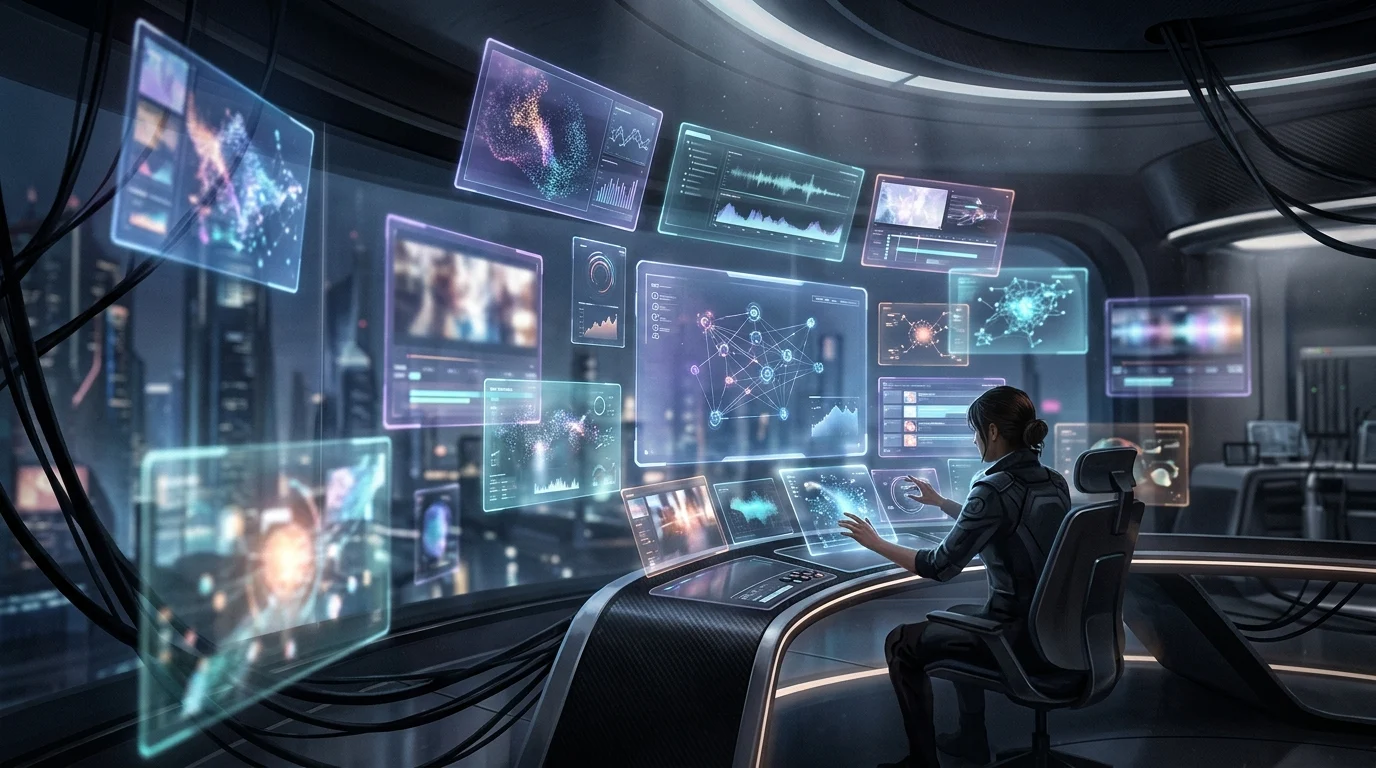
That “control room” mindset is how professional teams already work—one brief, several engines, best result wins.
#Why Kubeez’s models are often a stronger fit than Sora 2 for production work
This isn’t about hype or benchmark screenshots you can’t reproduce. It’s about capabilities teams actually bill for—many of which were never exclusive to Sora 2, and are stronger or more controllable on models Kubeez already runs at scale:
- Cinematic brand and narrative — Google Veo 3.1 delivers strong physics, lighting, and native audio with dialogue—ideal when the bar is “could this air?” See our Veo 3.1 deep dive.
- Premium motion and flagship quality — Kling 3.0 is built for high-end motion and professional timelines when quality is non‑negotiable. Compare lines in our Kling 3.0 vs 2.6 guide.
- Social video with sound that sticks — Kling 2.6 shines when native audio, lip sync, and platform-native pacing matter more than a cinematic sheen. Read AI video with sound.
- Fast iteration and strong value — Seedance is a practical choice when you need sound-on clips and want to iterate quickly without burning the whole budget.
For still assets—thumbnails, key art, consistent characters—Nano Banana 2 (the same model family we used for the illustrations in this post) remains a default many teams prefer for value, editing, and consistency. Explore image generation on Kubeez media.
Bottom line: For a large share of marketing, social, and commercial video workflows, the combination above already produces more controllable, more repeatable results than betting everything on Sora 2 inside one app—and that gap only widens now that OpenAI itself is moving on from that product shape.
#Keep building—on stable ground
AI video isn’t retreating; infrastructure choices are consolidating. One provider retiring Sora 2 doesn’t close the category—it reminds you why access to lots of models matters. The teams that win are the ones that diversify models, document requirements, and ship on stacks they control.
When you’re ready to run your next brief across Veo, Kling, Seedance, and more in one place:
Open video generation on Kubeez
For a full map of what’s available (and when to use it), see our AI models guide and text-to-video workflow primer.