AI Product Videos for Ecommerce: Convert More Browsers to Buyers in 2026
AI product videos are the biggest CVR lever left for ecommerce in 2026. Workflow: hero shot → Seedance 2 Fast → PDP video + UGC ads at catalog scale.
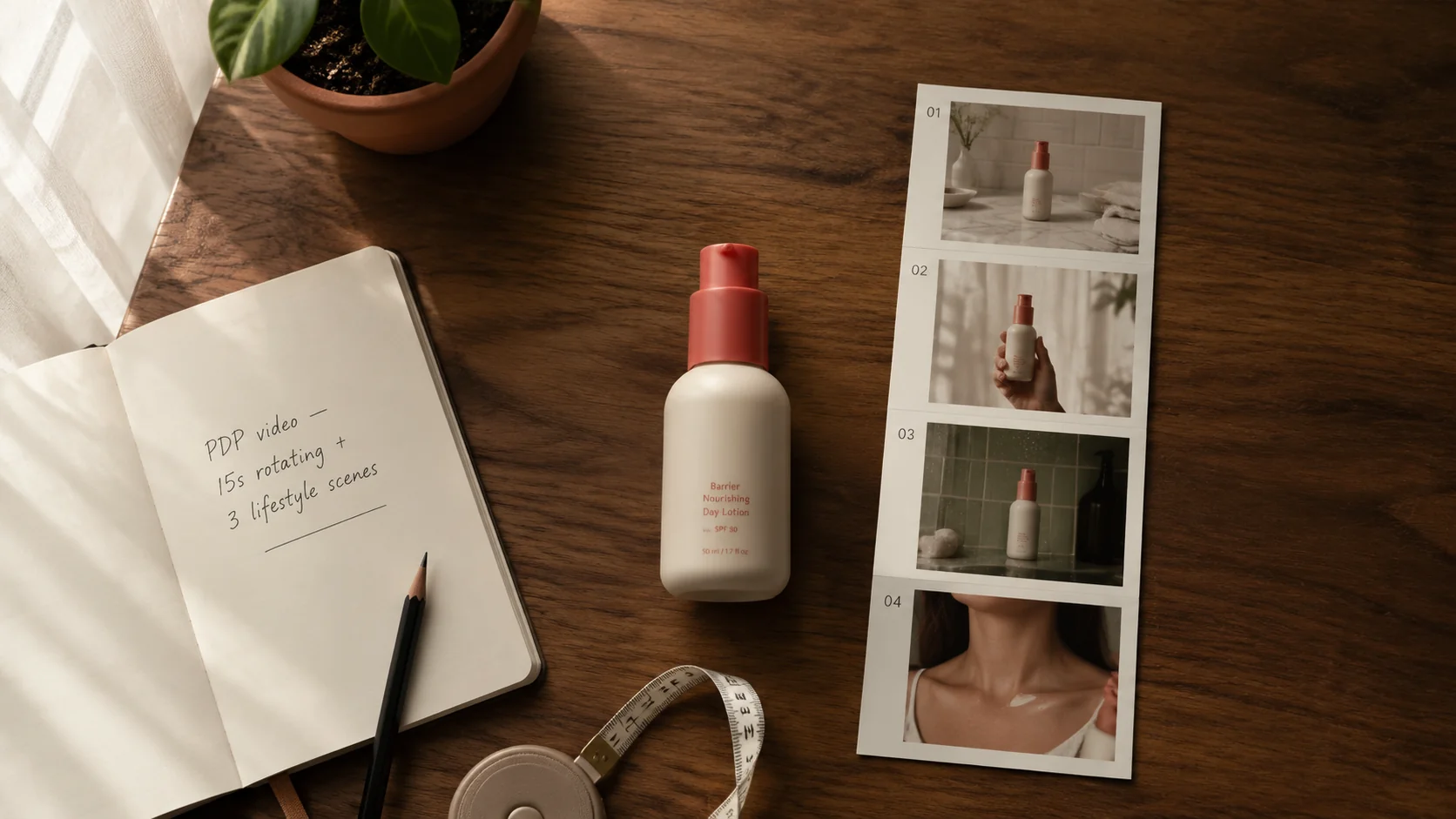
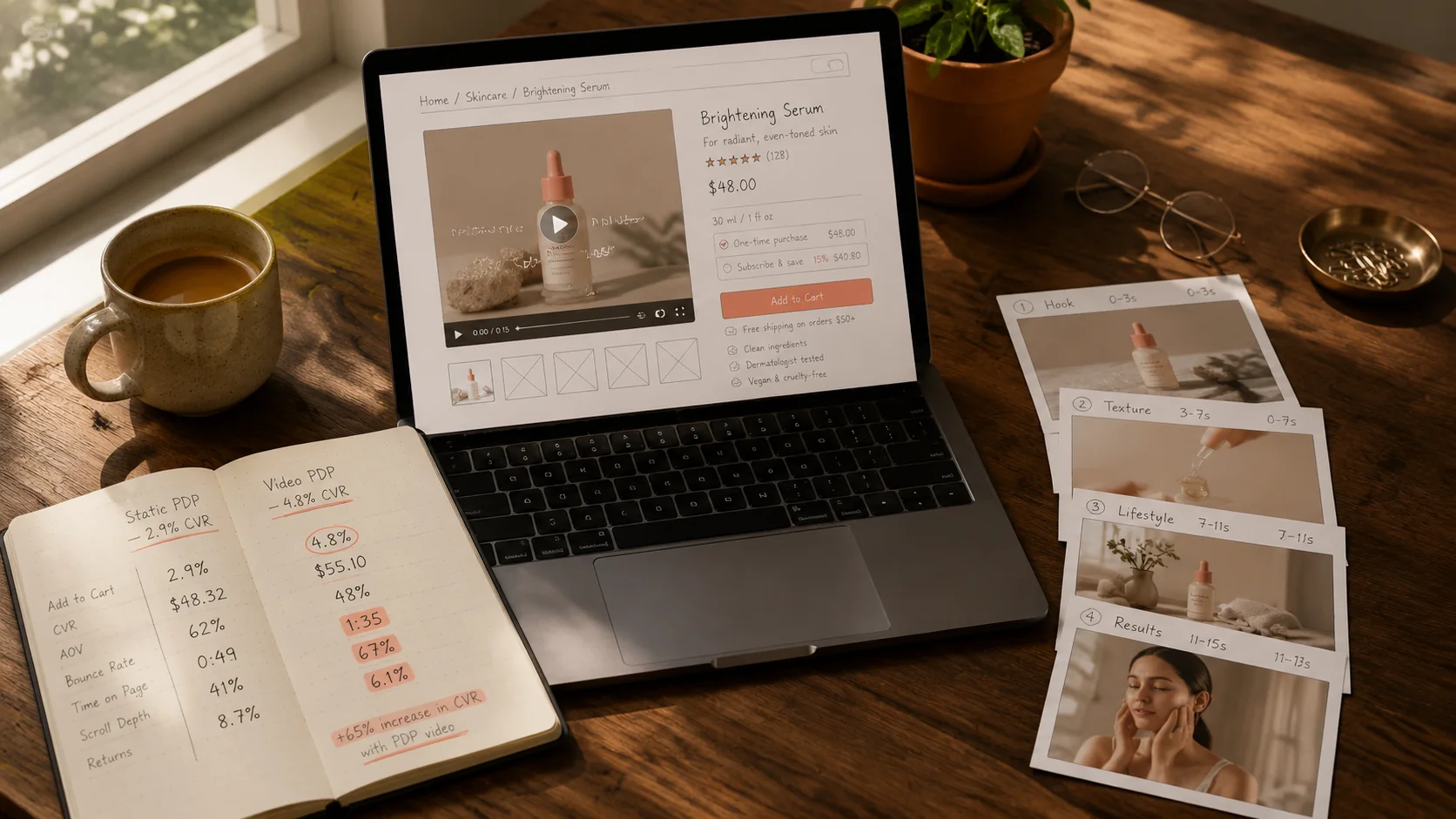
Most Shopify stores in 2026 still ship product detail pages built around static images. The top-converting ones don't. AI product videos on the PDP are the single biggest unforced uplift left in ecommerce — and they are now cheap enough to ship on every SKU. Industry data puts the conversion gap at roughly 4.8% with PDP video vs 2.9% without, a ~65% relative lift driven purely by what shoppers see on the page (Shopify CRO benchmarks 2026).
This post is the workflow ecommerce ops actually need: how to use Kubeez models — Seedance 2 Fast, Veo 3.1, Kling 3.0, plus image editors like Nano Banana 2 and gpt-image-2 — to turn one hero shot into a full PDP video set and a feed of UGC-style ads, without a studio, a crew, or a content agency line item.
#The PDP video gap is the biggest CVR lever left
Look at any high-velocity Shopify store — Glossier, Allbirds, Vuori, Ridge — and you will find native video on every PDP. Look at the average store on the platform and you'll find six static photos and a description. That gap is doing real damage:
- Pages with product video convert up to 80% better than pages without, with shoppable PDP video adding another 30%+ on top in 2026 benchmarks (Shoppable Video guide 2026).
- Likelihood of add-to-cart rises 144% after a shopper watches a product video, and engagement-to-cart climbs 225% on shoppable formats (Shopify CRO benchmarks 2026).
- Video on the PDP cuts product return rates by ~35% for fashion and home, mostly because shoppers see fit, scale, and texture before they buy (parcelLab returns 2026).
Translate those into your P&L: a store doing 10,000 orders/month with a 50% return rate saves around €17,500/month when video drops returns by a third (parcelLab). On the front end, that's a real chance to lift sitewide CVR from a 2% floor toward 4–5%.
The bottleneck has never been whether video works. It's the cost of producing it for hundreds of SKUs. That's the part AI just solved.
#What "AI product videos ecommerce" means in 2026
Three distinct video assets earn revenue for an online store. AI now produces all three from a single hero image:
- PDP videos — 10–20 second loops on the product page. Rotating beauty shot, texture macro, scale demo, lifestyle pan.
- UGC-style social ads — 6–15 second clips for TikTok Shop, Meta Advantage+, and Google Performance Max. Unboxing, try-on, lifestyle vignette.
- Marketplace and email video — 15–30 second product-in-use shots for Amazon, eBay, and lifecycle email.
For all three, the input is the same: one good product photo. The output is dictated by model choice, prompt, and a 5-minute edit.
#The image-to-video workflow that actually ships
Here's the loop a small ecommerce team can run in an afternoon:
Step 1 — Lock the hero shot. If you already have studio product photography, you're set. If not, use Nano Banana 2 or gpt-image-2 to generate a clean three-quarter hero on a single-color background. One image, no compromises — every downstream asset traces back to it.
Step 2 — Generate variants with image editing. Feed the hero into Nano Banana 2 and ask for background swaps (white studio → marble counter → linen sheet → sunlit windowsill) and lifestyle composites (model holding the product, product on a shelf, product in a real environment). One hero shot becomes ten contextual stills.
Step 3 — Animate with image-to-video. Pick the right Kubeez video model for the job:
- Seedance 2 Fast — your default for PDP video. ~21% cheaper per second than Seedance 2 Standard at 720p, same motion engine. Hand it the hero shot, prompt a slow rotate or a subtle camera push, and you have a 6–10 second PDP loop in under a minute of generation time.
- Veo 3.1 — when the clip needs dialogue or a voiced product callout in the same pass. Strong for founder-voice UGC ads.
- Kling 3.0 Pro — pick this for the hero ad creative you actually paid-promote. Best fidelity, native audio, the cinematic option.
- p-video — the cheapest draft tier when you're sanity-checking framing across a 200-SKU catalog. Step up to Seedance 2 for the final render.
Step 4 — Compose. A 15-second PDP video is usually 6s rotating hero + 6s lifestyle vignette + 3s detail macro. Stitch in any editor — KubeezCut, CapCut, Premiere — add a soft track from AI music generation, captions if needed, and ship.
#Why this changes Shopify product video economics
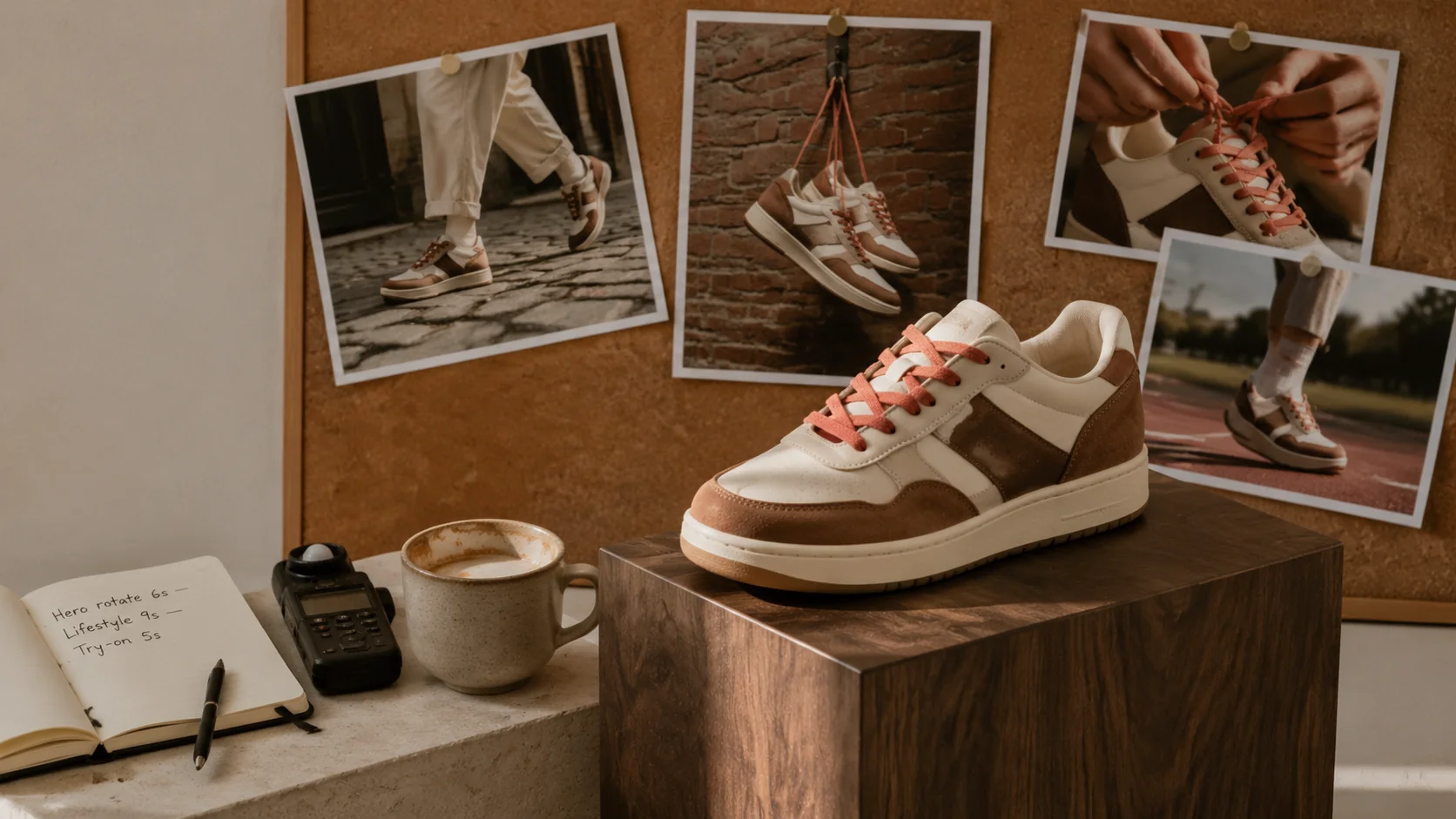
A traditional product video shoot prices in at $500–$2,000 per SKU once you account for studio time, models, edit, and rights. For a 200-SKU catalog, that's a six-figure budget before the first add-to-cart. The AI version flips the cost structure:
- One hero shot, generated or photographed once.
- 5–10 PDP variants per SKU at Seedance 2 Fast rates — credits, not invoices.
- Iteration is free: try a different angle, a different background, a different mood before you commit a single dollar of paid spend.
The math reverses. Instead of asking which 20 hero SKUs deserve video?, you ask which 5 SKUs don't need it yet? That's the real ecommerce conversion video unlock — universal coverage instead of selective coverage.
#UGC-style ads for TikTok Shop, Meta, and Performance Max
TikTok Shop is on track to hit $112.2 billion in global GMV in 2026, up from $66B in 2025, and ~60% of US TikTok Shop GMV comes from short-form video content, not from store-tile browsing (Marketing LTB TikTok Shop stats 2026). The platform is a video commerce channel before it is anything else — and Meta Advantage+ and Google Performance Max are converging on the same creative format.
This is where AI-generated UGC stops being a novelty and starts being a media plan. The workflow:
- Unboxing scenes — image-to-video on a packaging hero shot. Seedance 2 Fast handles a 6–8s reveal motion cleanly.
- Try-on and lifestyle vignettes — use Nano Banana 2 to composite the product onto a model, then animate with Kling 3.0 or Veo 3.1 for the hero ad.
- Founder-voice product callouts — Veo 3.1 generates the visual and the synced dialogue in one pass.
For a paid social team running Meta Advantage+ or TikTok Shop Spark Ads, the play is volume. Generate 20 variants of the same ad concept on Seedance 2 Fast. Promote the three with the best hook rate. Total creative cost is well under a single freelance UGC contract.
See the broader playbook in AI ad creatives that convert and the Kubeez ads tooling.
#Background swap, multi-variant, and the editor-first stack
Most of the time the limiting factor isn't generating the video — it's having enough on-brand stills to animate. That's where image editing earns its keep:
- Nano Banana 2 for photorealistic edits and lifestyle composites. Feed the product, name the environment, get a usable still in seconds.
- gpt-image-2 for typography-heavy variants — PDP cards with on-image text, comparison stills, packaging mockups.
- Multi-variant batching — same product, twenty backgrounds, twenty stills. Each becomes a 6-second video. Each video becomes a PDP carousel slot or a Performance Max asset.
The cheapest mistake at this stage is generating from scratch instead of editing the hero. Always feed the original hero in as a reference — consistency across PDP and ad creative is what separates a brand from a stack of AI-slop product images. See the Nano Banana 2 guide for the prompting bar.
#A 30-day rollout for an existing Shopify store
If you run an ecommerce store and you want a defensible CVR move on the calendar, this is the shape of it:
Week 1 — Hero pass. Audit your top 50 SKUs by traffic. Pull or generate a clean hero shot for each. This is your reference library.
Week 2 — PDP video batch. Push every hero through Seedance 2 Fast. Target a 10–15s rotating + lifestyle clip per SKU. Embed in the gallery, never below the description (placement is half the lift).
Week 3 — Paid social variants. For your top 10 SKUs by margin, generate 5 ad variants each in different scenes/moods. Run them through Meta Advantage+ and TikTok Shop. Cull on hook rate after 72 hours.
Week 4 — Measure. Compare CVR, AOV, and return rate on the 50 SKUs with video vs the rest of the catalog. The pattern from the published benchmarks is consistent enough that if you don't see a lift, the issue is placement or video quality, not the strategy.
#What to use on Kubeez
The full ecommerce stack lives on a single subscription:
- Video generation — Seedance 2 Fast for PDP video, Veo 3.1 for dialogue, Kling 3.0 for hero ads.
- Image generation and editing — Nano Banana 2 and gpt-image-2 for heroes, variants, lifestyle composites.
- Ad creative tooling — turn the video and image set into platform-ready ads.
- API and MCP — batch the whole catalog programmatically once the workflow is dialed in.
#FAQ
How long should a product video be on a Shopify PDP? 10–20 seconds for the loop on the gallery. Industry data shows short-form video under 60 seconds delivers the highest ROI; 30s–2min is the sweet spot for explainer content under the fold (Sellers Commerce video stats 2026).
Do AI product videos hurt brand trust? Only if they look generic. Feed your real product as a reference image to a high-fidelity model (Nano Banana 2, Kling 3.0) and the output is indistinguishable from studio footage on a phone screen. The trust risk is in stock-style synthetic product shots, not in AI-assisted real-product video.
What's the cheapest way to produce PDP video at scale? Seedance 2 Fast at 720p. ~21% cheaper than Standard, same motion engine, sufficient for in-gallery PDP video. Reserve Kling 3.0 Pro or Veo 3.1 for paid-social hero ads.
Can I use AI product videos for TikTok Shop? Yes. ~60% of US TikTok Shop GMV runs through short-form video (Marketing LTB). The platform rewards volume and hook rate over polish — Seedance 2 Fast is the cost-aware default, with Kling 3.0 reserved for the small set of ads that earn paid amplification.
Will video reduce returns? Across published 2026 studies, PDP video reduces return rates by roughly 35% in fashion and home — the categories where fit, scale, and texture drive returns (parcelLab). Less consistent in commoditized categories where returns are driven by price, not product mismatch.
#Quick takeaway
- Static PDPs are the biggest unforced CVR loss in 2026 ecommerce. Pages with video convert up to 80% better.
- One hero shot → ten variants → ten PDP videos. Seedance 2 Fast is the default workhorse; Kling 3.0 and Veo 3.1 for paid-social hero ads.
- TikTok Shop, Meta Advantage+, and Performance Max have converged on short-form AI-friendly video as the dominant creative format.
- Return rates drop ~35% when shoppers see the product in motion before they buy.
See also