How to Redesign Your Room, House, or Car Using AI on Kubeez
See exactly how any interior design, exterior renovation, or car customization looks before spending a penny. Upload a photo and visualize changes in minutes.
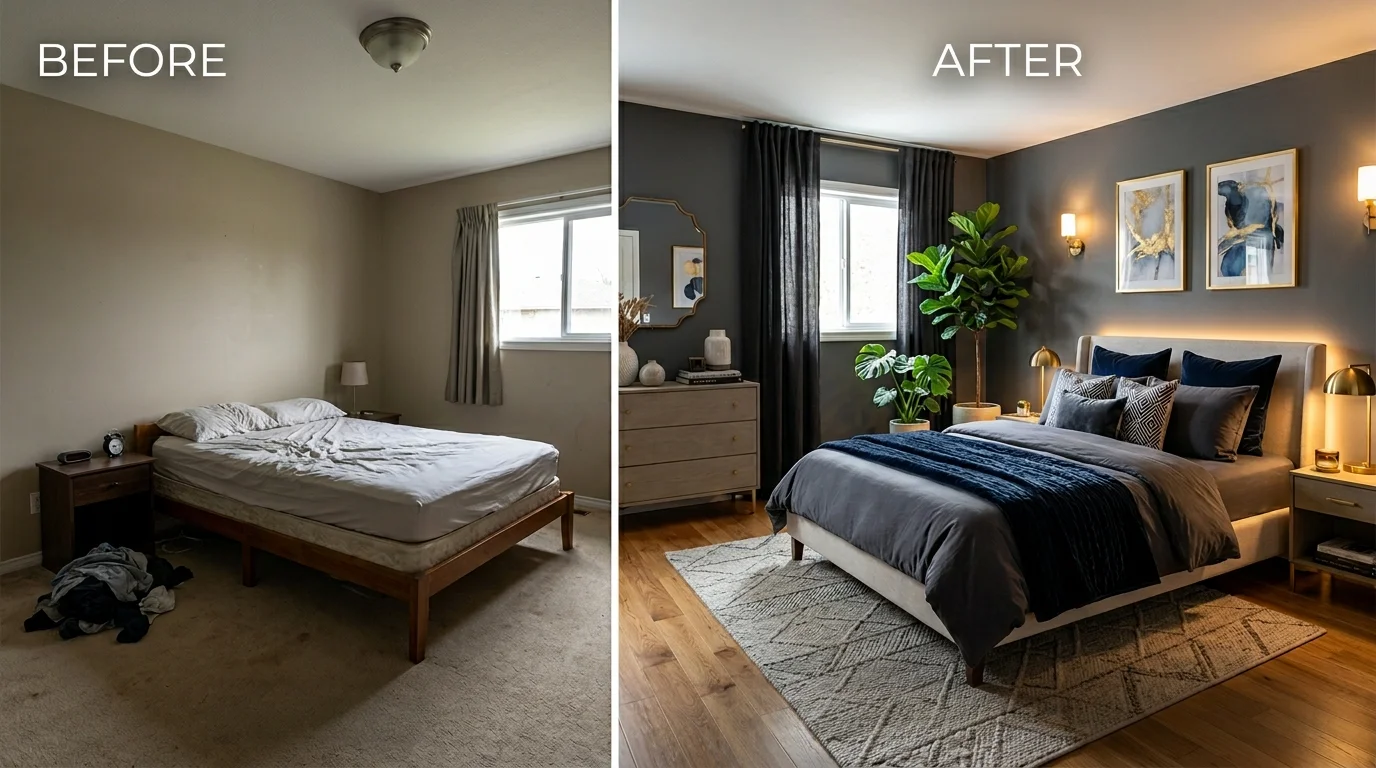
You've looked at the same living room for three years and know it needs a change — but you have no idea if a navy accent wall would actually work, or whether replacing the sofa with a sectional would make the space feel smaller. Traditional solutions: hire an interior designer, or live with uncertainty and make expensive decisions blind.
AI image editing on Kubeez offers a third option: see exactly what any change looks like before committing to it. Upload a photo of your room, house exterior, or car — and generate photorealistic visualizations of any redesign concept in minutes.
#Room Redesign: See the Change Before You Make It
Interior design decisions are hard to reverse. Paint is relatively cheap, but the wrong sofa, the wrong flooring, or the wrong lighting fixture can cost thousands to fix. AI visualization eliminates guesswork by showing you the result before any money is spent.
#How to Redesign a Room with Kubeez
- Take a clear, well-lit photo of your current room (wide angle works best)
- Go to Kubeez Image Generation and select Nano Banana 2
- Enable image-to-image mode and upload your room photo
- Write a prompt describing the redesign you want to see
Example prompts:
"Redesign this living room in a modern Japandi style. Remove existing furniture. Add low-profile teak platform sofa with cream linen cushions, natural rattan pendant lights, bamboo floor lamp, large indoor fiddle leaf fig tree in terracotta pot. Keep the existing windows and flooring."
"Transform this bedroom into a luxury boutique hotel aesthetic. Add upholstered velvet headboard in deep teal, bedside pendant lights, white crisp hotel bedding, marble bedside tables, abstract art on walls."
"Redesign this kitchen with dark navy shaker cabinets, brass hardware, white quartz countertops, subway tile backsplash in pale grey. Modern farmhouse style."
The AI preserves the spatial layout of your room while completely reimagining the aesthetic, giving you a realistic preview that accounts for your actual room dimensions and natural light.
#What You Can Test
- Complete style changes (minimalist, maximalist, industrial, Scandinavian, boho)
- Individual element swaps (new sofa color, different flooring, paint color)
- Lighting transformations (bright day vs. warm evening ambiance)
- Furniture arrangement alternatives
- Accent colors and wall treatments
- Storage and organization configurations
Generate 5–10 variations per session. The cost per generation on Kubeez is a fraction of even a single hour with an interior designer.
#House Exterior: Reimagine Your Curb Appeal
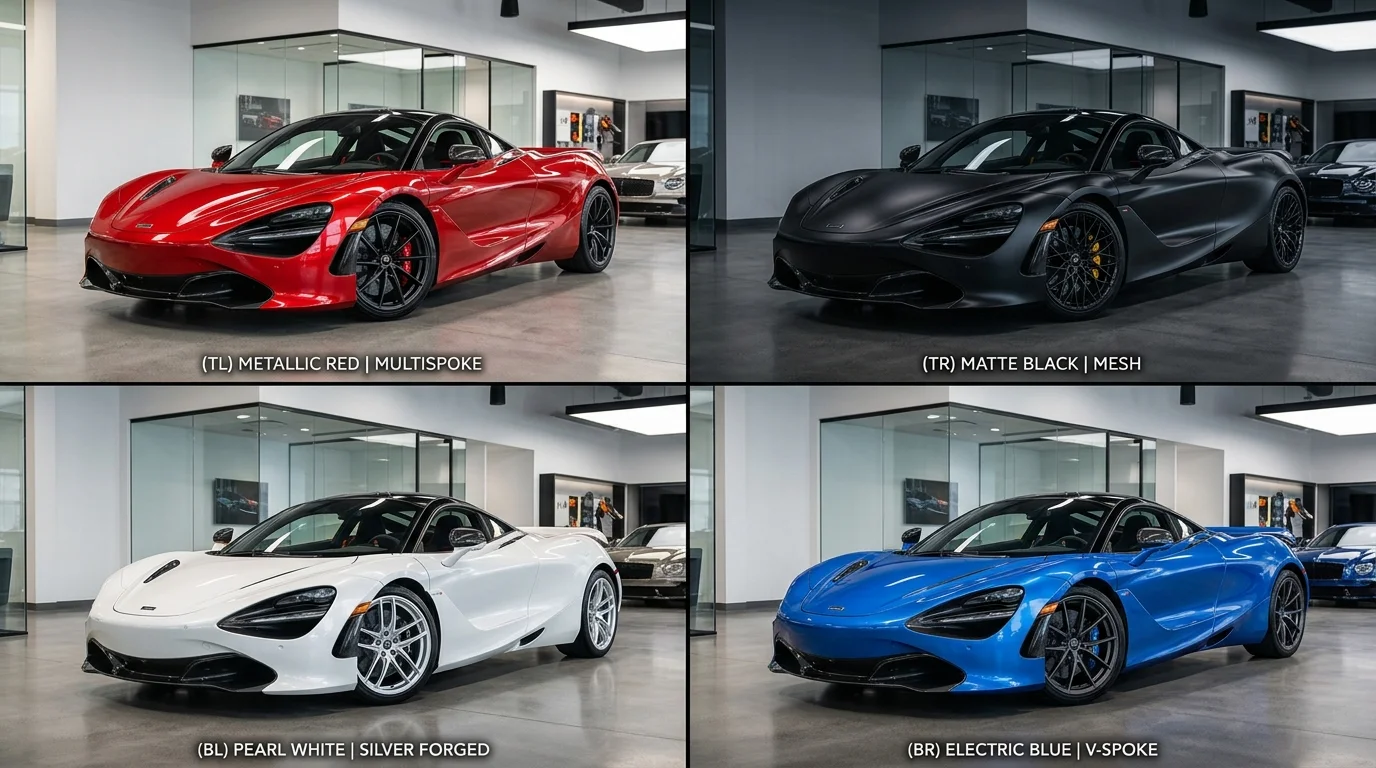
The exterior of a house is the first impression — and one of the most expensive things to change. Repainting a house exterior costs thousands. New siding: more. Landscaping: unpredictable. Before starting any of these projects, visualize the outcome first.
#Exterior Redesign Ideas to Explore
Paint and color schemes: Test different exterior paint colors on your actual house without buying a single sample pot. See if your instinct about that charcoal grey actually works with your roof color.
Architectural style changes: Visualize your 1990s ranch house in a modern farmhouse style with board and batten siding. Or explore what Mediterranean-style stucco would look like on a currently brick-clad home.
Landscaping concepts: Generate versions with different garden designs — formal hedging, wild cottage garden, minimal modern gravel and ornamental grass, lush tropical planting.
Window and door upgrades: See exactly how new black-framed windows would change the look of your home before placing an order.
Additions and extensions: Visualize how a porch addition, garage extension, or second-story addition would look on your home before engaging an architect.
Example prompt for house exterior redesign:
"Redesign this house exterior in a modern farmhouse style. Replace the existing beige vinyl siding with white board and batten siding, add dark charcoal window frames and front door, install stone veneer on the lower third of the facade, add a covered porch with black metal post brackets, improve landscaping with boxwood hedges and gravel pathway."
#Car Customization: Visualize Before You Commit
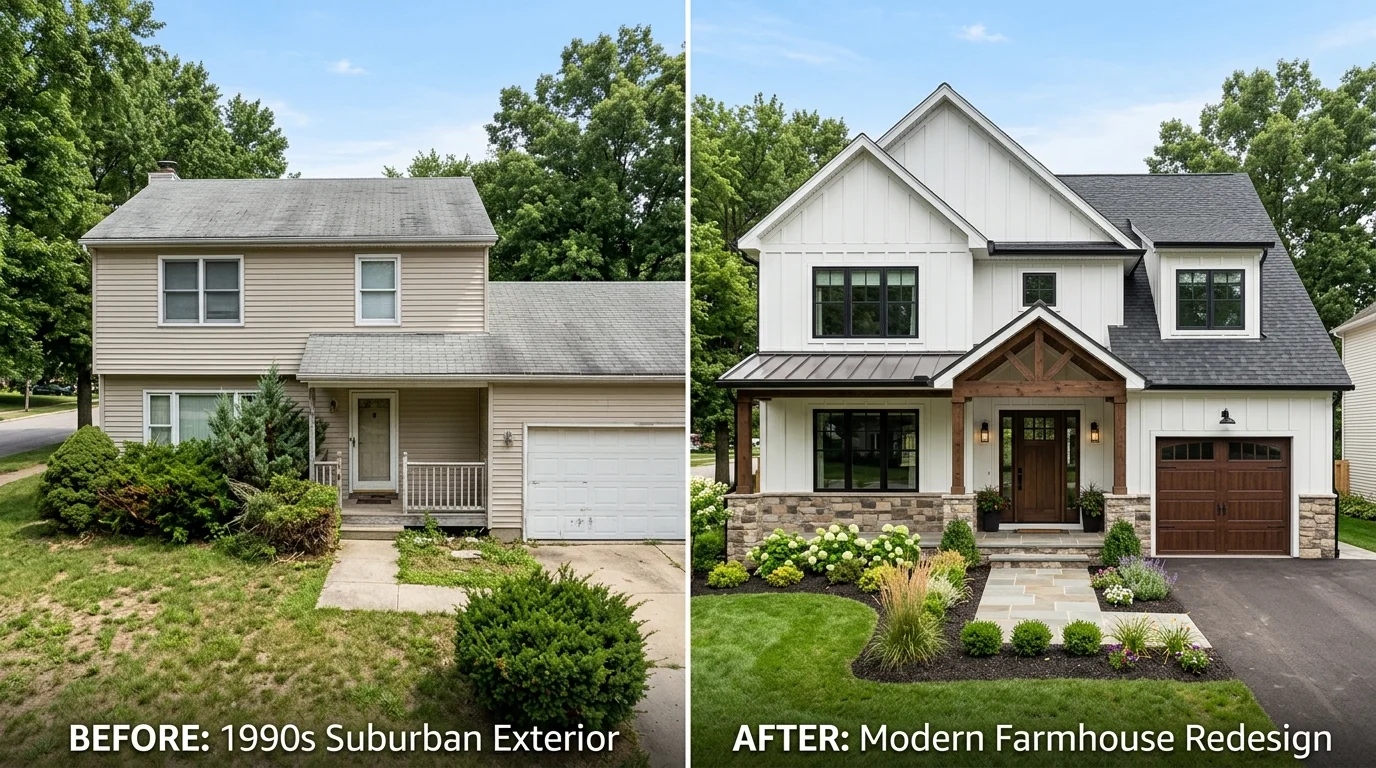
Car customization decisions — new paint color, different rims, body kit additions, window tinting — are expensive and often irreversible without significant cost. AI visualization lets you see exactly how your car would look in any configuration before spending a penny at the body shop.
#What to Explore with Car AI Editing
Paint colors and finishes: Test any color in matte, gloss, satin, or metallic finishes on your actual car. See if that pearlescent white or electric blue actually suits your vehicle's body lines.
Wheel and rim styles: Visualize different wheel designs — multi-spoke, split-spoke, deep dish, or OEM-style — in various finishes (polished, machined, matte black, gold).
Body modifications: See how a lip spoiler, side skirts, or widebody kit would look before ordering parts.
Window tinting levels: Visualize different tint percentages on your car to find the right balance of aesthetics and visibility.
Interior color changes: Generate visualizations of different interior colorways — switching to red leather seats, or changing to an all-black interior from two-tone.
Example prompt:
"Show this car with a full custom paint job in midnight blue metallic finish. Change the existing wheels to gloss black 20-inch multi-spoke rims. Add subtle chrome delete trim, blacked out rear badges. Professional car photography style, dramatic studio lighting."
#Tips for the Best Results
Lighting matters for input photos: Natural light produces better AI output than harsh flash photography. Take photos during daytime near windows for rooms, and outdoors in shade for cars.
Shoot the right angle: Wide-angle shots capture full rooms better. Exterior houses photograph best from a slight 3/4 angle that shows two faces. Cars photograph best from a 3/4 front or rear angle.
Be specific in prompts: The more specific you are about materials, styles, and finishes, the more accurate and useful the visualization.
Generate multiple versions: Don't stop at the first result. Each generation explores the concept slightly differently. Generate 4–8 variations per idea to find the most realistic and appealing interpretation.
Use for decision-making, not precision: AI visualizations capture design direction and aesthetic extremely well. They're not architectural drawings — use them to build confidence in a direction, then work with professionals on implementation specifics.
Try AI room and home redesign on Kubeez and start making better design decisions with the confidence of seeing the result first.
See also