Technology
Seedance 2.5 vs Seedance 2 vs Kling 3.0 vs MiniMax H3
Four flagship AI video models compared on duration, resolution, references, audio and measured arena scores, with an honest note on which ones you can actually generate with today.
· Kubeez
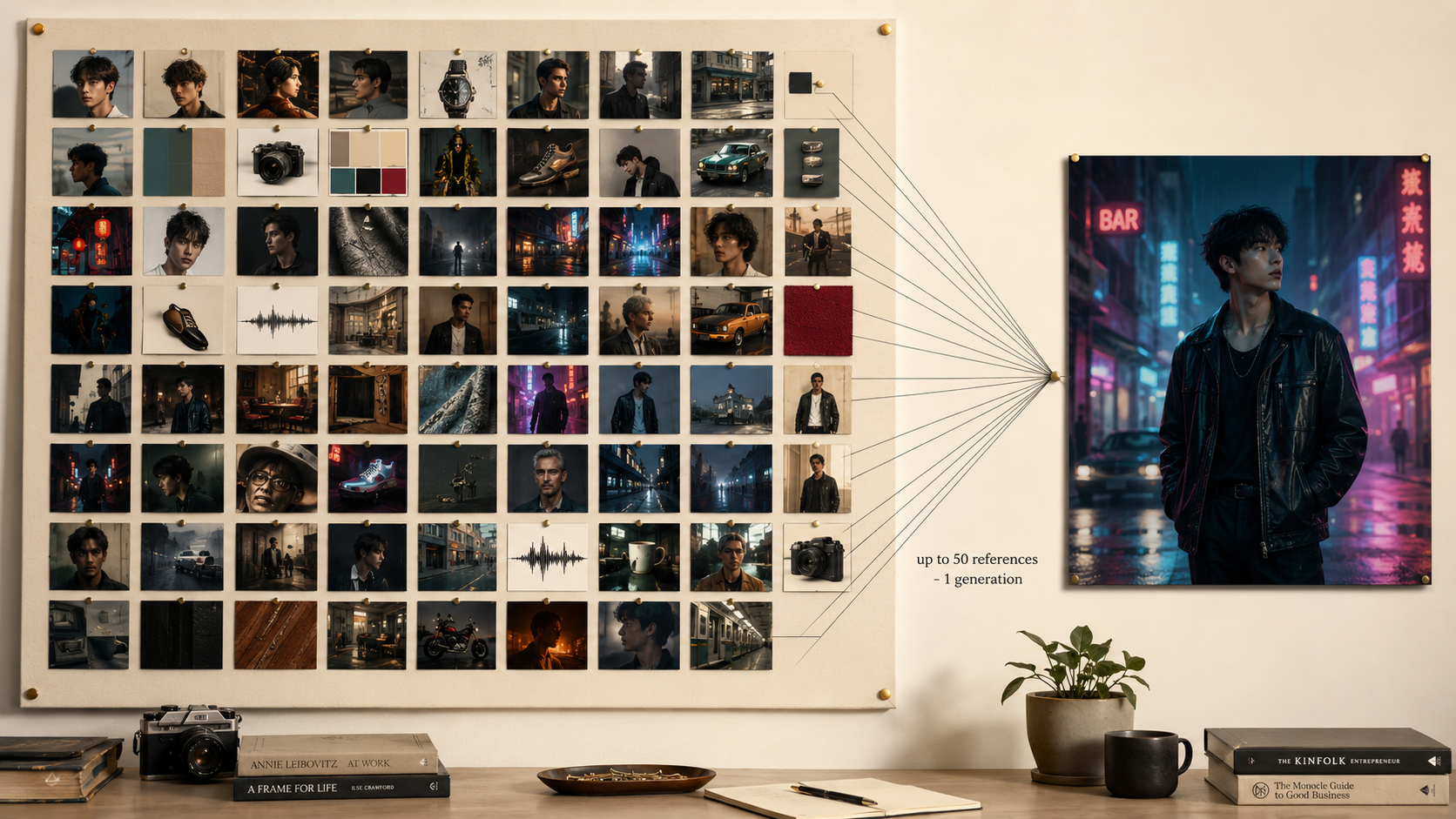
Four models define the top of AI video in August 2026: ByteDance's Seedance 2.5 and Seedance 2.0, Kuaishou's Kling 3.0, and MiniMax's H3 (Hailuo 3.0). They are not interchangeable, and two of them cannot be called through a general API yet.
Everything below is either a published specification, a vendor claim marked as one, or a measured arena score with its source and date. Nothing here is estimated.
The table
| Seedance 2.5 | Seedance 2.0 | Kling 3.0 | MiniMax H3 | |
|---|---|---|---|---|
| Maker | ByteDance | ByteDance | Kuaishou | MiniMax |
| Announced / released | 23 Jun 2026 | Released 2026 | 5 Feb 2026 | 31 Jul 2026 |
| Max single clip | 30s, single pass | 15s | 15s | 15s (4-15s) |
| Max resolution | Native 4K, 10-bit | Native 4K, 3840x2160 @ 24fps | 1080p standard tiers, 4K tier | 2K (2560x1440) |
| Reference inputs | Up to 50 multimodal | 9 images + 3 video + 3 audio | Start frame (Turbo: exactly 1); elements on full 3.0 | 12 files total (max 9 images, 3 video, 3 audio) |
| Native audio | Yes, same latent space | Yes, audio + BGM | Yes, multilingual with accents | Yes, stereo |
| Multi-shot | Single take is the point | No | Yes, multi-shot storyboard (3.0 Omni) | No |
| Arena, text-to-video | Not listed | 1,224 (3rd) | 1,111 (7th, 1080p Pro) | 1,239 (2nd) |
| Arena, image-to-video | Not listed | 1,196 (1st) | 1,073 (12th, 1080p Pro) | 1,187 (3rd) |
| Available on Kubeez | Not yet | Yes | Yes (3.0 and 3.0 Turbo) | No |
Arena figures are Artificial Analysis video arena Elo, data as of July 2026; the image-to-video board cited is the with-audio board. Elo moves as votes accumulate — check the live board before quoting it anywhere that matters.
Seedance 2.5: the longest take, when you can get it
Announced at Volcano Engine FORCE on 23 June 2026. The three specifications that separate it: 30 seconds generated in a single pass, up to 50 multimodal reference inputs (images, audio, style references and 3D white models, against 12 in the prior generation), and native 4K with 10-bit colour depth. ByteDance claims roughly 20 percent better prompt adherence than the previous generation — a vendor number with no published methodology.
The workflow feature worth watching is a 3D white-box preview: a low-fidelity animatic of camera and blocking you approve before the full render.
The catch is access. Rollout went to ByteDance's own consumer apps first, and third-party API access is not generally available in the international BytePlus ModelArk catalogue, which still documents the 2.0 series. Seedance 2.5 also has no arena entry — you cannot vote on a model you cannot call. It is not on Kubeez yet, and we do not put a button on a model we cannot deliver.
Pick it when: you need one unbroken 30-second take, or you have a reference kit too large for any other model. Once it opens up.
Seedance 2.0: the measured leader you can actually use
The current flagship of the line, and the strongest independently measured model of the four on image-to-video: 1,196 Elo, first place on the Artificial Analysis image-to-video (with audio) board, and 1,224, third on text-to-video, as of July 2026.
Specs on Kubeez: native 3840 x 2160 at 24 fps, up to 15 seconds, 9 reference images + 3 reference videos + 3 reference audio clips in a single generation, native audio and BGM generated jointly with the picture, and image-to-video that takes both a first and last frame — you define where the shot lands, not just where it starts. Cheaper Fast (480p/720p) and Mini tiers cover iteration and volume.
Pick it when: you want the best measured image-to-video quality available today, a real 4K master, or heavy reference conditioning for character and product consistency.
Kling 3.0: multi-shot storyboards and speed
Released 5 February 2026. Kuaishou's pitch is different from ByteDance's: instead of one longer take, Kling 3.0 Omni offers a multi-shot storyboard where you specify duration, shot size, perspective, content and camera movement per shot, and the model keeps coherence across them. Native audio covers English, Chinese, Japanese, Korean and Spanish, including accent selection and multi-character dialogue with different languages per character. Maximum length is 15 seconds.
Its arena position is lower than its feature set suggests — 1,111 in text-to-video, 1,073 in image-to-video for the 1080p Pro tier — but leaderboards measure single-clip fidelity, not storyboard coherence or dialogue handling, which is where Kling is genuinely differentiated.
On Kubeez you get both the full Kling 3.0 tiers and Kling 3.0 Turbo: 3 to 15 seconds, 720p or 1080p, 16:9 / 9:16 / 1:1, audio included in every clip, and image-to-video from exactly one start frame. Turbo is the cheap fast lane; full 3.0 adds multi-shot, motion control and the 4K tier.
Pick it when: you need several coherent shots from one brief, multilingual dialogue, or the fastest cheap iteration loop.
MiniMax H3: 2K with stereo audio, at a low list price
Launched 31 July 2026 as MiniMax-H3, an omni-modal model that handles text, image, video and audio in one transformer. Output is up to 2K (2560x1440), 4 to 15 seconds, with native stereo audio. Inputs cap at 12 files total — up to 9 images, 3 video clips and 3 audio clips, with audio requiring an accompanying image or video — and prompts up to 7,000 characters.
MiniMax lists pay-as-you-go pricing from $0.13 per second (about $1.95 for a 15-second clip) and claims that is under a third of mainstream 2K rates — their comparison, not ours. Open weights have been promised under a community licence but had not shipped at launch.
It benchmarks well: 1,239, second in text-to-video and 1,187, third in image-to-video, both close behind the leaders.
Pick it when: you want strong text-to-video with stereo audio and price is the deciding factor. Note that H3 is not on Kubeez — it is in this comparison because it is one of the four models that matter right now, not because you can generate with it here.
Choosing, in one paragraph each
Best image-to-video you can use today: Seedance 2.0. First place on the measured board, native 4K, and the deepest reference conditioning of anything currently callable.
Best for multi-shot briefs and dialogue: Kling 3.0. Storyboard control and five-language native audio are things no amount of Elo captures.
Cheapest fast iteration: Seedance 2 Mini or Kling 3.0 Turbo, then spend once on the full-resolution keeper.
The one to watch: Seedance 2.5. Thirty seconds unbroken and 50 references is a step change, not a bump — but until the API opens, it is a specification, not a tool.
Generate with what is live in the video generation studio, or drive it from an agent through the Kubeez MCP. Current per-second credit rates for every model and resolution are on the pricing page. Deeper on the new flagship: Seedance 2.5 explained.
Sources: ByteDance's Seedance 2.5 announcement at Volcano Engine FORCE (23 June 2026); Kuaishou's Kling 3.0 release; MiniMax's H3 launch and API documentation; Artificial Analysis video arena leaderboards, data as of July 2026; and the Seedance 2.0 and Kling 3.0 specifications as implemented on Kubeez.