Technology
Seedance 2.5 Explained: 30-Second Single Shots, 50 References, Native 4K
What ByteDance actually announced with Seedance 2.5: a 30-second native single shot, up to 50 multimodal references, native 4K in 10-bit, and where it stands today.
· Kubeez
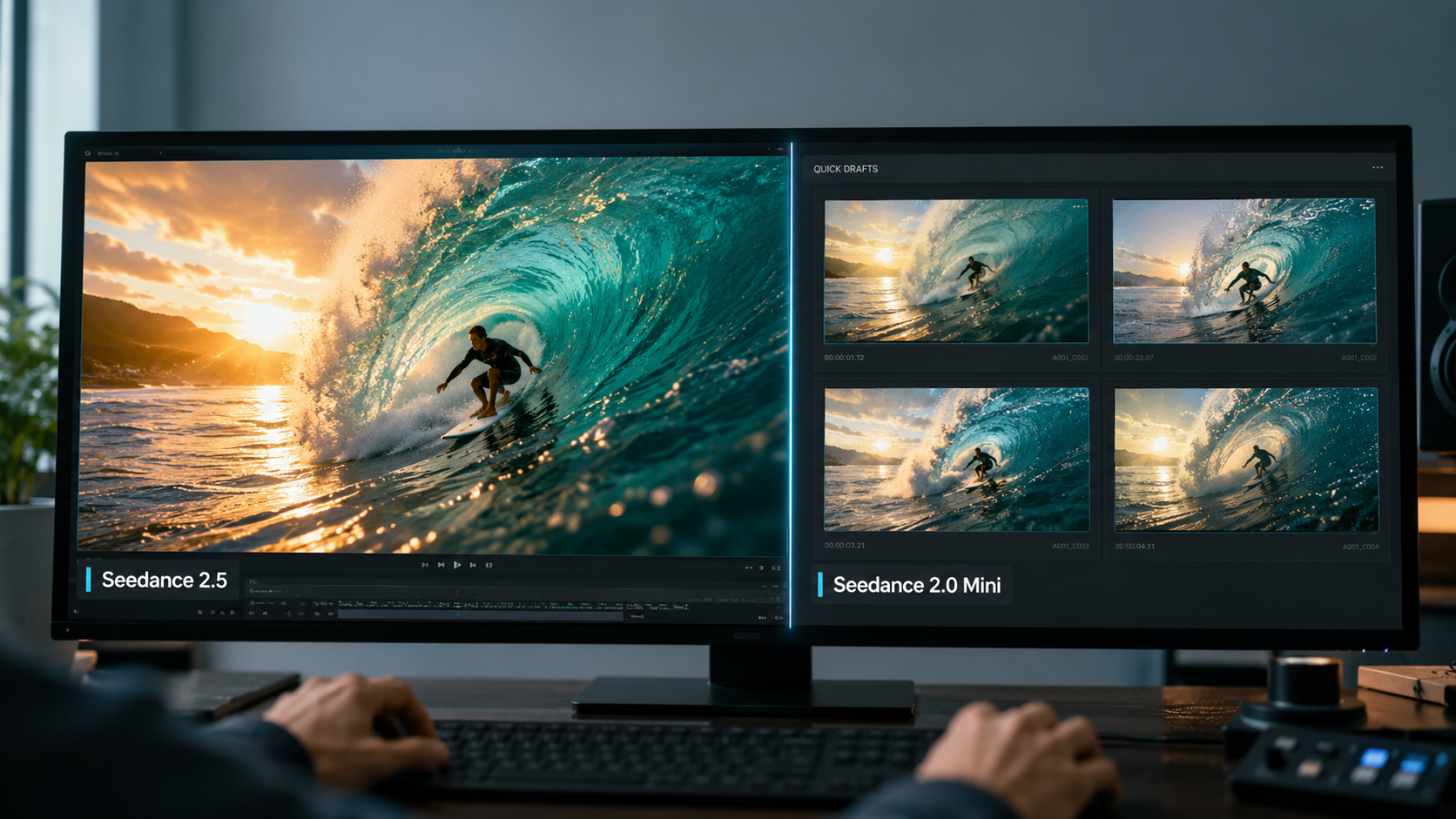
ByteDance unveiled Seedance 2.5 on 23 June 2026 at the Volcano Engine FORCE conference in Beijing. It is the follow-up to the Seedance 2.0 family, and the headline numbers are not incremental: a 30-second native single shot, up to 50 multimodal reference inputs, and native 4K in 10-bit colour.
This post sticks to what has actually been announced and shown, separates ByteDance's own claims from independently measured results, and ends with what you can generate on Kubeez today while 2.5 finishes rolling out.
Where Seedance 2.5 stands right now
Order of events, because a lot of coverage blurs it:
- 23 June 2026 — announced at Volcano Engine FORCE. Enterprise beta live at announcement, public launch signalled for the weeks after.
- Late July 2026 — rollout on ByteDance's own consumer surfaces (Jimeng AI, Doubao), rather than a broad developer release.
- Today — third-party API access through BytePlus ModelArk is not generally available in the international catalogue, which still documents the Seedance 2.0 series.
That is why Seedance 2.5 is not generateable on Kubeez yet. The dashboard carries a coming soon card and nothing else, deliberately: no button, no credit price, no promise of a date we do not control. The moment ByteDance opens the API, it goes into the model picker the same way Seedance 2.0 4K and Seedance 2 Mini did.
Also worth knowing: 2.5 has no entry on public arena leaderboards yet. Artificial Analysis' video arenas (data as of July 2026) rank Seedance 2.0 720p — first in image-to-video with audio at 1,196 Elo, third in text-to-video at 1,224 — but 2.5 is absent, because you cannot vote on a model you cannot call. Treat every "2.5 is number one" claim as vendor positioning until it appears there.
The 30-second single shot
Most video models generate a continuous take of roughly 5 to 15 seconds. Seedance 2.5 generates 30 seconds in one pass.
The word doing the work is single. Stitching six 5-second clips together and stitching them well are different jobs. Across cuts, AI video drifts: a face resets, the key light shifts a few degrees, the fabric changes weave, the camera move restarts. Every seam is a place where the viewer's eye catches.
A 30-second unbroken take holds one character, one set, one lighting setup, and one camera move from frame 1 to frame 720. That is the length of a full ad spot, an explainer beat, a product walk-through, or a scene with an actual beginning, middle and end. It moves generated video from "b-roll you cut around" to "shot you build on".
Up to 50 multimodal references
The second jump is context. Seedance 2.5 accepts up to 50 multimodal inputs in a single generation — images, audio, style references, and 3D white models (untextured geometry used to lock camera and blocking). ByteDance puts the previous generation's ceiling at 12.
Fifty inputs is enough to load a production bible into one call: a character from eight angles, a product from every side, the location, the wardrobe, a motion style pulled from real footage, a colour palette, and an audio mood — all conditioning the same take. The more reference signal a model holds, the less it invents, and the closer the output lands to the thing in your head.
For scale, Seedance 2.0 on Kubeez today takes 9 reference images, 3 reference videos and 3 reference audio clips in one generation. That is already unusual. 2.5 raises the ceiling by roughly 4x.
Native 4K, and 10-bit colour
Seedance 2.5 outputs native 4K — generated at full resolution rather than upscaled after the fact — and adds 10-bit colour depth.
10-bit is the part professionals will care about more than the pixel count. Eight-bit video gives you 256 levels per channel; 10-bit gives 1,024. In practice that means smoother gradients (skies, skin, soft light falloff without banding) and real headroom when you push a grade. It is the difference between footage you can colour and footage you have to protect.
Audio is generated in the same latent space as the picture rather than added afterwards, which is what ByteDance credits for on-screen actions and their sound effects landing in sync.
The claims, labelled as claims
Two things from the announcement are ByteDance's own numbers, not measured results:
- "20 percent better prompt adherence" than the prior generation. Vendor-reported. No public methodology.
- Longest single-shot duration on the market. Plausible against the 15-second ceiling most rivals ship, but self-declared.
One genuinely novel workflow feature is easier to verify once it is in hands: a 3D white-box preview — a low-fidelity animatic of camera and blocking that you approve before paying for the full render. Anyone who has burned an afternoon re-rolling a shot because the camera drifted left instead of right understands why that matters.
What to use today on Kubeez
While 2.5 rolls out, the current flagship is live and not a consolation prize. On Kubeez right now:
- Seedance 2.0, native 3840 x 2160 at 24 fps, up to 15 seconds, with 9 images + 3 videos + 3 audio references and native audio generated jointly with the picture. Image-to-video takes a first and last frame, so you define where a shot starts and where it lands.
- Seedance 2 Fast at 480p/720p for iteration, and Seedance 2 Mini as the cheapest tier for volume drafts.
- Kling 3.0 and Kling 3.0 Turbo when you want multi-shot storyboards or a fast, cheap pass.
Start in the video generation studio, or drive it from an agent through the Kubeez MCP. Live credit rates per model and resolution are on the pricing page — they move with provider pricing, so the app is the source of truth, not a blog post.
The short version
Seedance 2.5 is a real step: 30 seconds unbroken, 50 references, native 4K in 10-bit, and audio built in rather than bolted on. It is also, today, a model most people cannot call. We are building for it, and it lands on Kubeez when the API opens.
Until then, the 15-second native-4K version of the same lineage is already here: generate with Seedance 2.0.