Marketing
What Are UGC Ads? Examples, Costs and AI Options
UGC ads are paid ads that look filmed by a real customer on a phone. See what they look like, what creators charge for, and how to make them with AI, honestly.
· Dex
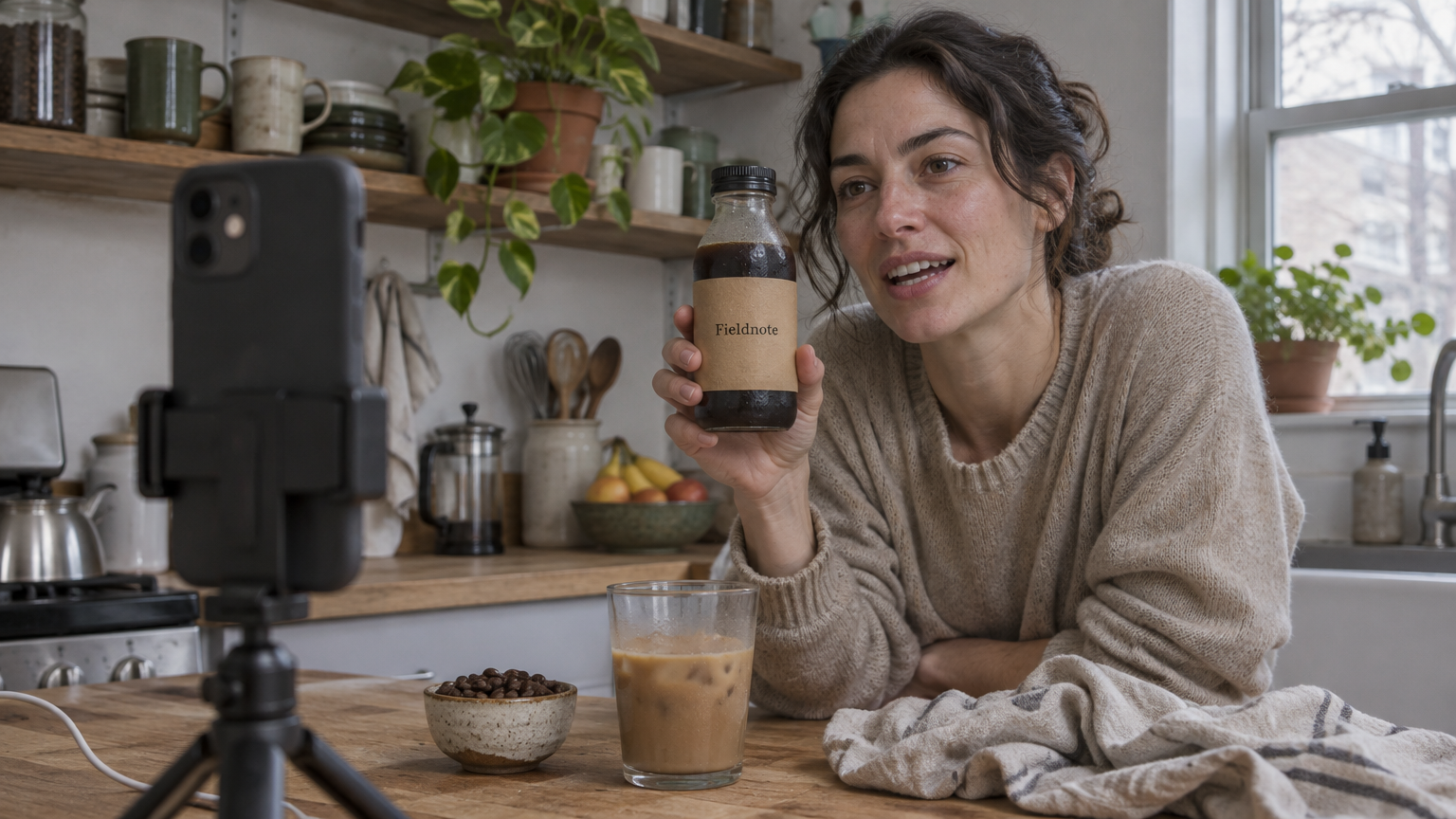
UGC ads are paid ads that look like a regular person made them on a phone. Someone holds the product, talks to the camera, shows it working, and captions run along the bottom. The person can be a real customer, a creator you hire for the video, or, more and more, a presenter generated with AI. What makes it a UGC ad is the style: vertical, casual, first person, and built to blend into a social feed instead of looking like a TV spot.
This guide explains what UGC ads are, what a typical one looks like, why brands run them, what you pay for when you hire creators, and how to make UGC style ads with AI without crossing the line into fake reviews.
What are UGC ads?
UGC stands for user generated content: photos, videos and reviews that customers post themselves, without the brand directing them. Think of an unboxing someone films in their car, or a quick "does this actually work" video in a bathroom mirror.
A UGC ad takes that look and puts ad spend behind it. There are three common sources:
- Real customers. A buyer posts a video, and the brand asks permission to run it as an ad.
- Hired UGC creators. People who are paid to film videos in a customer style. They usually do not post the video on their own account; the brand gets the file and runs it.
- AI UGC ads. The presenter, the scene and the voice are generated from a prompt or a product photo, with no shoot at all.
UGC ads are not the same as influencer ads. An influencer is paid for their audience as well as their content. A UGC creator is paid mainly for the video itself, and the brand supplies the reach through its ad budget.
What a UGC ad looks like
Most UGC video ads follow the same anatomy, even when the topic changes.
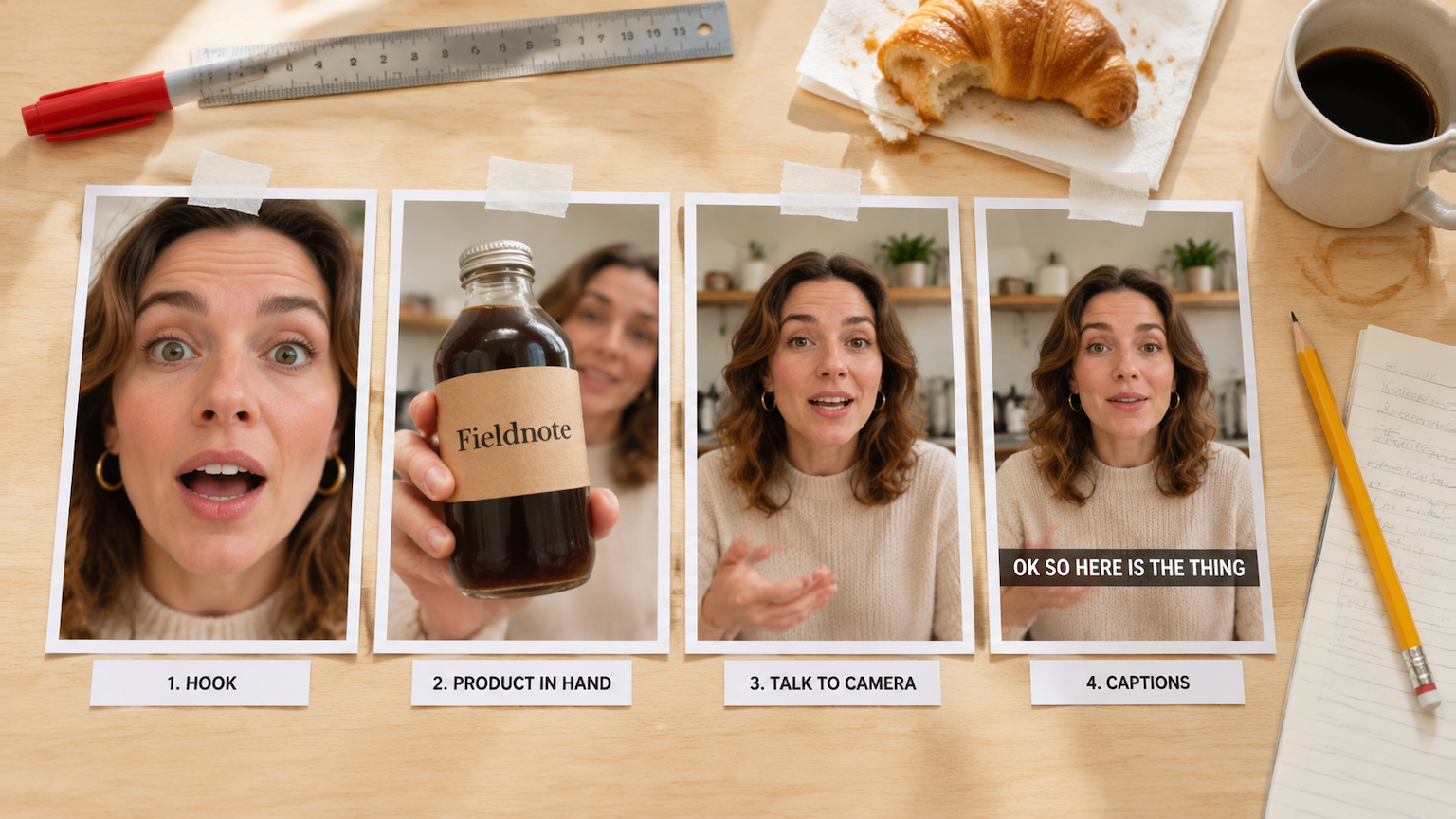
- The hook. The first second has to stop the scroll: a surprised face, a strange setup, a direct question, or a bold line of text. If the hook fails, nobody sees the rest.
- The product in hand. The product shows up early and close to the lens, held the way a buyer would hold it, with the label readable.
- Talking to camera. One person speaks straight into the phone, in plain words, as if telling a friend. Eye contact with the lens is what makes it feel personal.
- Captions. Bold subtitles on screen, because many people scroll with the sound off.
- A simple ending. A last look at the product and one next step, such as where to buy it.
Around that core, the look stays deliberately plain: vertical 9:16 framing, a real room, daylight from a window, a handheld or propped phone, and no studio polish.
Why brands use UGC ads
- They look native. A UGC video sits in a feed between posts from friends and creators, so it gets a second of attention before anyone decides it is an ad.
- They show the product in use. A hand opening the jar, a pour, a before and after. Seeing a real moment answers questions a packshot cannot.
- Someone explains it. A person can say in ten seconds what a product page says in three paragraphs.
- They are quick to vary. One script can become many versions with different hooks, people, settings and lengths. With UGC style ads, testing hooks is where most of the learning happens.
None of this guarantees results. A UGC ad still needs a product people want, an offer that makes sense and a lot of testing.
What UGC ads cost when you hire creators
Creator rates vary too much for a single number to be useful, and they change with the platform, niche and the creator's experience. What you can control is what you are paying for. When you ask for a quote, these are the things that move the price:
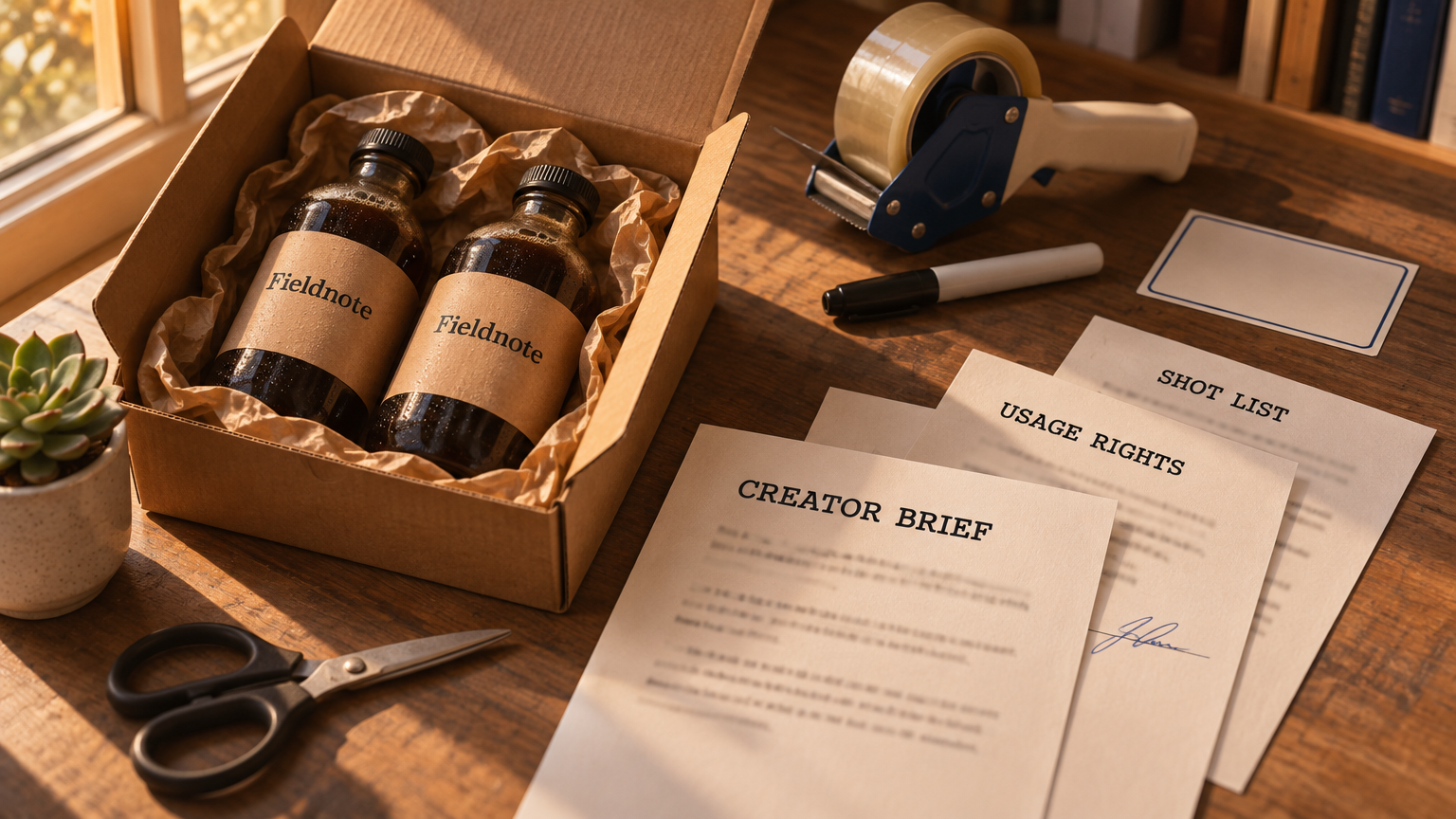
- Number of videos and hooks. One video with three alternative opening lines usually costs less than three separate videos.
- Usage rights. Organic posting only is the cheapest. Running the video as a paid ad costs more, and the price usually goes up with how long you may run it.
- Running ads from the creator's account. Some brands pay extra to run the ad from the creator's own handle. Meta calls these partnership ads, and TikTok's version is Spark Ads, which promote a post that lives on the creator's account.
- Raw footage. Unedited clips let your editor build more cuts later.
- Revisions and turnaround. Extra rounds of changes and rush delivery add to the bill.
- Exclusivity. Asking a creator not to work with competitors for a period costs more.
- Product and shipping. The creator needs the real product in hand, which means stock, packaging and delivery time.
Ask for quotes that list the video fee and the usage rights separately. It makes creators easy to compare and avoids surprises when you want to extend a winning ad.
Common UGC ad formats
These are the formats you will see most often:
- Review style: a person shares what they think of the product.
- Unboxing: the package arrives and gets opened on camera.
- Problem to solution: an everyday annoyance, then the product fixing it.
- Tutorial: how to use it, in three quick steps.
- Reaction: the face at the moment of the first try.
- Routine: the product as one step in a morning, workout or skincare routine.
- Hands only: no face, just hands, the product and close up texture.
For UGC ad examples, see 8 UGC video ad ideas for products, where each format comes with a finished clip. Read that next if you want to pick a format for your own product.
How to make UGC style ads with AI
An AI UGC video generator replaces the shoot. Instead of shipping a product, waiting for footage and paying for rights, you generate the person, the setting and the voice. There are two ways to do it on Kubeez.
From one product photo, with a template. Kubeez Marketing Studio has a shelf of UGC video templates: a product test, a first reaction, a routine, hands only and more. You pick a template and a product photo, and the template decides who is on screen and what happens. There is no avatar to choose and no script to write. Clips run 4 to 15 seconds, in vertical, square or wide sizes, with sound, and spoken lines follow your brand kit's language.
From your own prompt. On the AI ad generator page you will find the models we use for UGC style and spokesperson ads:
- Seedance 2.5 builds a street interview style clip with dialogue and background sound from one photo of the speaker, in one take.
- OmniHuman 2.0 turns a portrait and your own voice recording into a presenter talking to camera, as long as the audio.
- Veo 3.1 makes vertical selfie style shots with natural room sound.
Then finish the clip the way a creator would. Add word-timed subtitles with Auto Captions, and make several versions of the opening line so you can test hooks against each other.
Kubeez is credit based and the cost of each generation shows before you run it. Signing up is required, and new accounts get a one-time welcome credit grant to try it; there is no permanent free tier. Current plans are on the pricing page.
Where AI UGC ads are honest to use, and where they are not
AI can make a UGC style ad. It cannot make a real customer. That is the line to keep in mind, and it is not only a matter of taste.
Do not present a generated person as a real customer. In the US, the FTC's rule on fake reviews and testimonials covers testimonials that misrepresent that they come from someone who does not exist, and the FTC names AI-generated fake reviews as an example. A generated person saying "I used this for three weeks and my skin cleared up" is a testimonial from someone who does not exist. A generated presenter who shows the product, demonstrates a routine or reads out what is on the label is a different thing: a creative format, not a customer review.
Use real likenesses only with permission. Your founder or a team member can be the presenter, on their own photo and their own voice. Using anyone else's face or voice without their consent breaks platform rules; TikTok's ads policy, for example, does not allow content that misuses someone's likeness without permission.
Label AI content where the platform asks for it. As of TikTok's misleading and false content ads policy (last updated April 2026), AI-generated and significantly edited media is allowed in ads if you add TikTok's AI-generated content label or your own clear disclaimer, caption, watermark or sticker. Undisclosed AI content can get the ad rejected or restricted. In Ads Manager this is the "This ad contains AI-generated content" toggle; Spark Ads follow TikTok's Community Guidelines disclosure instead. Meta says it applies an "AI info" label to ads made with its own generative AI tools and that it will begin detecting some ads made with third-party AI tools. Policies change, so check each platform's help pages before you launch.
Real creators disclose too. If you pay a creator or send free product, the FTC's guidance for influencers says the relationship should be disclosed in the video itself, not only in the description.
This is a summary of what the platforms and the FTC publish, not legal advice. If an ad makes health, money or results claims, have someone qualified review it.
FAQ
What does UGC stand for?
User generated content. It means content made by customers and regular users rather than by the brand. A UGC ad is a paid ad made in that style.
Are UGC ads the same as influencer ads?
No. With influencer marketing you pay for the person's audience and their post. With UGC ads you pay mainly for the video, and the brand runs it as an ad through its own budget. Some campaigns mix both by running the ad from the creator's account.
Do AI UGC ads need a label?
On TikTok, yes, if the ad contains content that is completely AI-generated or significantly edited by AI: use the AI-generated content label or your own clear disclaimer. Meta labels some AI-made ads itself. Check each platform's current policy before launch.
Is an AI-generated presenter a fake testimonial?
It depends on what the presenter says. Showing and describing the product is a creative choice. Claiming personal results as if they were a real customer is the kind of testimonial the FTC rule targets.
Can I run a creator's video from their own account?
Yes, if they authorize it. Meta's partnership ads and TikTok's Spark Ads both let a brand promote content tied to a creator's account. Creators usually charge extra for this kind of usage.
Make your first UGC style ad
Start with one product photo and one format. Open a UGC template in Marketing Studio, or write your own spot on the AI ad generator page, then caption it, make a few hooks and test them.
Dex writes the Kubeez guides and makes every example with the same tools you use.