Technology
Google Gemini TTS vs ElevenLabs: The 2026 AI Voice Showdown
Google Gemini TTS vs ElevenLabs in 2026: voices, expressive control, languages, realism and pricing compared. Use both AI text-to-speech engines on Kubeez.
· Kubeez
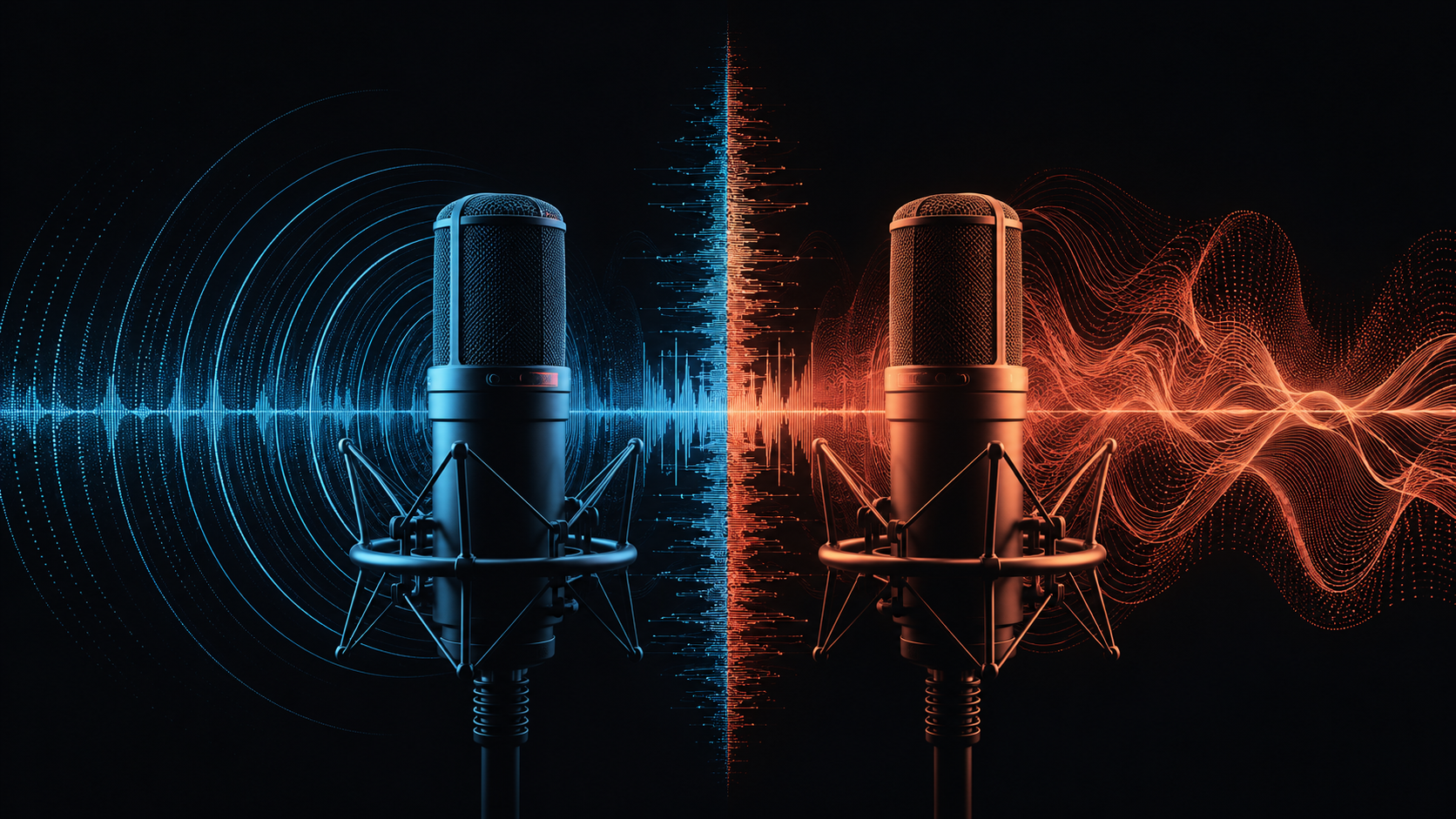
Choosing an AI text-to-speech engine in 2026 mostly comes down to one question: do you want to direct a performance or engineer an acoustic signal? Google Gemini TTS leans into expressive, prompt-steered delivery, while ElevenLabs gives you fine-grained acoustic dials and famously consistent voices. The good news for buyers: you no longer have to pick a side before you try them. Both engines now live side by side inside the Kubeez Dialogue/TTS tool at /audio/dialogue, selectable with a single provider switch.
Verdict in brief: Reach for Google Gemini TTS when you want characterful, emotionally varied reads driven by plain-language direction and inline performance cues. Reach for ElevenLabs when you need repeatable, dial-tuned consistency across long projects and tight control over the exact acoustic feel. This guide breaks down how they differ on voices, control, languages, realism, and cost, so you can match the engine to the job.
Quick comparison
| Google Gemini TTS | ElevenLabs v3 | |
|---|---|---|
| Maker | ElevenLabs | |
| Voices on Kubeez | 30 (Zephyr, Puck, Charon, Kore, Fenrir, Leda, Orus, Aoede, and more) | 26 (Rachel, Drew, Aria, James, Sarah, and more) |
| Direction style | Natural-language style prompt + inline performance tags | Acoustic dials (stability, similarity, style, speed) + context fields |
| Inline tags | Performed (e.g. [sigh], [laughing], [whispering], [shouting]) |
Stripped (control comes from the dials, not the text) |
| Language coverage | Broad, via BCP-47 codes (en-US, es-ES, ro-RO, and many more) plus auto-detect | 29 ISO language codes |
| Speakers | Single-voice TTS | Single-voice TTS |
| Input limit | Up to ~4,000 bytes of text | 5 to 5,000 characters |
| Best for | Expressive characters, dramatic reads, prompt-driven tone | Consistent narration, dubbing-style control, tuned repeatability |
Voices and expressiveness
This is where the two engines feel most different in practice.
Google Gemini TTS ships with 30 voices on Kubeez, named after celestial bodies (Zephyr, Puck, Charon, Kore, Fenrir, Leda, Orus, Aoede, and more). What sets it apart is that inline performance tags are actually performed, not stripped out. Write [sigh], [laughing], [whispering], [shouting], [extremely fast], or [long pause] directly into your text and the model acts on them. Google's own description of the model frames this around "audio tags, an intuitive way to control vocal style, pace and delivery", and independent coverage has called the broader 3.1 Flash TTS family "a new benchmark in expressive and controllable AI voice". For dialogue, audio drama, or any read that needs to feel acted, that inline control is genuinely useful.
ElevenLabs v3 is the default engine on Kubeez and brings 26 voices (Rachel, Drew, Aria, James, Sarah, and more) that the market has long regarded as some of the most natural available. Reviewers consistently rate ElevenLabs at the top for raw voice quality and realism; one 2026 review describes it as setting the bar for fidelity, and the v3 generation specifically improved expressiveness and consistency over earlier versions. The key behavioral difference: audio tags in the text are stripped, not performed. You do not steer ElevenLabs by typing [whispering]; you steer it with the dials.
So the expressiveness question is really about how you want to get there. Gemini hands you a director's chair and a script you can annotate. ElevenLabs hands you a mixing board.
Controls and direction
ElevenLabs gives you fine-grained acoustic dials:
- Stability: how steady versus variable the delivery is.
- Similarity boost: how closely the output hugs the chosen voice's character.
- Style exaggeration: how much expressive flavor to push.
- Speed: adjustable in the 0.7 to 1.2 range.
- previous_text / next_text: context fields so a clip flows naturally from what came before and into what follows, which matters a lot when you render a long script in chunks.
This is a precision toolkit. Once you find a setting that nails the tone for a project, you can lock it in and get the same feel across hundreds of clips. That repeatability is exactly why ElevenLabs is a favorite for audiobooks, e-learning, and dubbing-style work where drift between segments is unacceptable.
Google Gemini TTS gives you a natural-language style prompt plus the inline tags above. Instead of turning knobs, you describe the performance: "Speak with calm, warm enthusiasm," and the model adapts tone, pace, accent, and emotion to match. It is faster to express intent ("sound like a tired night-shift radio host") and slower to reproduce an exact acoustic fingerprint across a huge batch. For creative, varied, character-driven content, prompt-based direction is liberating. For locked-down consistency at scale, dials win.
A simple way to remember it: Gemini is steered with words, ElevenLabs is steered with numbers.
Languages
Both engines are strongly multilingual, which matters if you publish in more than one market.
- Google Gemini TTS offers broad coverage addressed through BCP-47 codes (en-US, es-ES, ro-RO, and many more) and supports auto-detect, so it can infer the language from your text. Google states the model "delivers high-fidelity speech and more precise control across more than 70 languages."
- ElevenLabs v3 covers 29 ISO language codes, with a multilingual lineage that reviewers note has expanded steadily across versions.
For most Western-market projects (English, Spanish, Romanian, French, German, and so on) either engine has you covered. If you need a long tail of less common languages or want the engine to guess the language automatically, Gemini's broader BCP-47 coverage and auto-detect give it an edge.
Quality and realism
Both engines produce speech that comfortably clears the "is this AI?" bar for most listeners, so picking on raw quality alone is splitting hairs. The honest framing is that they are excellent in different ways.
ElevenLabs built its reputation on natural, broadcast-grade fidelity and tight voice consistency. Multiple independent reviews in 2025 and 2026 place it at or near the top of the field for sounding genuinely human, especially for sustained narration. If your deliverable is a two-hour audiobook and you cannot have the timbre wander, that consistency is the whole game.
Google Gemini TTS pushes hard on expressive controllability. Reporting on the 3.1 Flash TTS family highlights its focus on steerable, emotionally varied delivery rather than raw scale, and notes strong showings on public quality-versus-cost comparisons. When the brief is "make this line land with feeling," performed inline tags and a style prompt get you there with less trial and error.
Practical takeaway: realism is a near tie; expressiveness style is the real differentiator. Test both on a representative sample of your actual script. The Kubeez Dialogue/TTS tool makes that a one-switch A/B test rather than two separate accounts and workflows.
Pricing model on Kubeez
On Kubeez, both engines are credit-based and billed per 1,000 characters, so the cost scales with how much text you synthesize rather than per request. That keeps budgeting predictable: a 4,000-character script costs roughly four times a 1,000-character one, regardless of which engine you choose.
Because credit rates change over time, this guide deliberately avoids quoting a specific number. For the current rate on each engine, check the live pricing and models pages: the available models reference and the audio tools overview. That way you are always reading today's number, not a stale one.
(If you also evaluate the vendors directly, treat any external price you find as a point-in-time figure and date it accordingly. Vendor pricing tiers shift frequently.)
Which should you pick?
Match the engine to the job:
Pick Google Gemini TTS when:
- You want emotion and character without fiddling with dials.
- Your script benefits from inline performance cues like
[whispering],[laughing], or[long pause]. - You are directing tone in plain language ("warm, conspiratorial, slightly amused").
- You need broad language coverage or want auto-detect to handle mixed input.
- You are making dialogue, ads, character reads, or social content that should feel alive.
Pick ElevenLabs v3 when:
- You need consistency across a long project (audiobooks, courses, multi-episode series).
- You want precise acoustic control via stability, similarity, style, and speed.
- You are rendering a script in chunks and need previous_text / next_text continuity.
- You have dialed in a sound you love and want to reproduce it exactly, every time.
- Broadcast-grade narration fidelity is the top priority.
Neither choice is wrong; they are tuned for different workflows. Many teams end up using both: Gemini for the expressive hero lines and character work, ElevenLabs for the long, steady narration spine.
Use both on Kubeez
The most practical answer to "Gemini or ElevenLabs?" is "try both in the same place." Kubeez added Google Gemini TTS alongside ElevenLabs in its Dialogue/TTS tool, and you switch between them with a single provider toggle at /audio/dialogue. That means:
- One account, one credit balance, one workflow for both engines.
- A genuine A/B test on your own script: paste your text, generate with ElevenLabs, flip the switch, generate with Gemini, and listen back.
- No vendor lock-in: if a project suits one engine better than the other, you are one click away.
Bring your script, decide whether you want to direct a performance (Gemini) or engineer a signal (ElevenLabs), and let your ears settle the rest.
FAQ
Is Google Gemini TTS better than ElevenLabs?
Neither is universally better. Google Gemini TTS excels at expressive, prompt-steered delivery with performed inline tags, while ElevenLabs v3 excels at consistent, dial-tuned narration. The best choice depends on whether you prioritize emotional range or repeatability. On Kubeez you can compare both directly at /audio/dialogue.
Do inline tags like [whispering] work in both engines?
No. With Google Gemini TTS, inline performance tags such as [sigh], [laughing], [whispering], and [long pause] are performed. With ElevenLabs, audio tags in the text are stripped, and you steer delivery using the stability, similarity, style, and speed dials instead.
How many voices and languages does each support?
On Kubeez, Google Gemini TTS offers 30 voices and broad language coverage via BCP-47 codes plus auto-detect. ElevenLabs v3 offers 26 voices across 29 ISO language codes. Both are single-voice TTS.
How is text-to-speech priced on Kubeez?
Both engines are credit-based and billed per 1,000 characters. Rates change over time, so check the current numbers on the available models and audio tools pages rather than relying on a fixed figure.
Can I use both engines without separate accounts?
Yes. Kubeez hosts both Google Gemini TTS and ElevenLabs in the same Dialogue/TTS tool at /audio/dialogue, so you share one account, one credit balance, and one workflow, and switch engines with a single provider toggle.